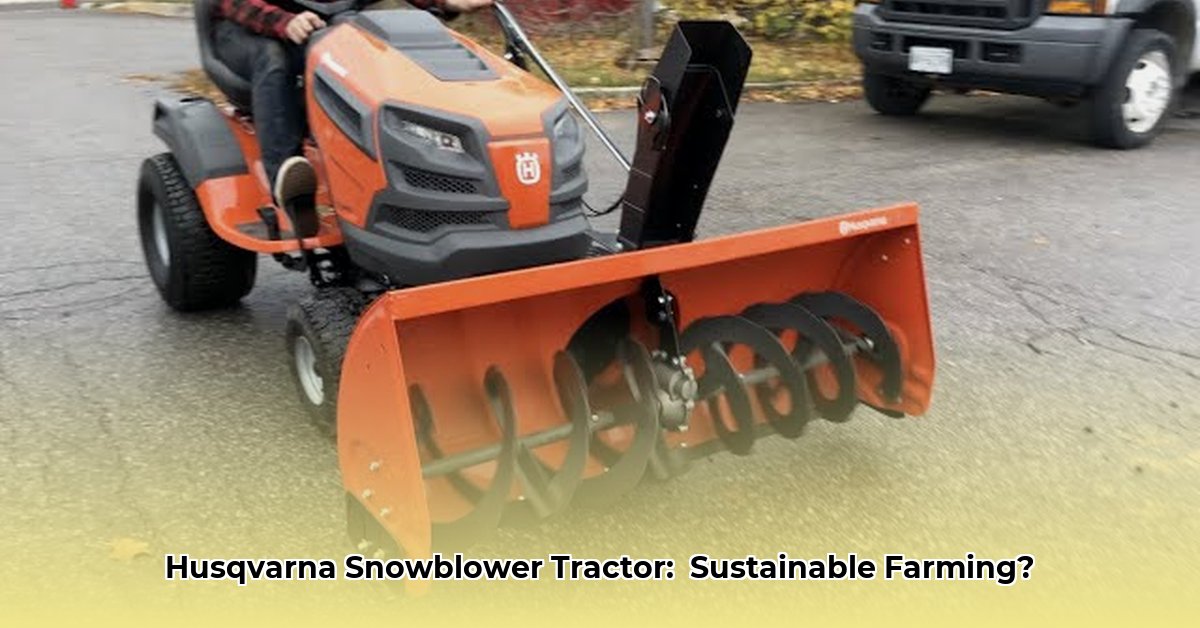
Winter's harsh grip on farmland demands efficient snow removal to protect livestock and maintain operations. However, traditional methods often carry significant environmental costs. This guide examines the Husqvarna snow blower tractor attachment, exploring its operational benefits and critically assessing its sustainability within the broader context of environmentally responsible farming. For more on tractor snow removal, see this helpful guide: Tractor Snow Removal Guide.
Operational Efficiency: Time and Labor Savings
The Husqvarna snow blower attachment, particularly the 42-inch model, promises substantial time savings compared to manual labor or older methods. Features like an electric lift and powerful impeller expedite snow clearing, freeing up valuable time for other farm tasks. While precise time savings vary depending on snow volume and operation size, user reports consistently indicate significant efficiency gains. This translates to reduced labor costs and increased productivity. However, quantifiable data supporting these claims from independent sources remains limited.
The Sustainability Gap: A Lack of Transparency
A significant hurdle in evaluating the Husqvarna snow blower’s environmental impact is the absence of comprehensive lifecycle assessment data from the manufacturer. This crucial information—covering manufacturing energy, operational fuel consumption, material recyclability, and end-of-life disposal—is currently unavailable. This lack of transparency prevents a complete assessment of its true environmental footprint and hinders informed decision-making regarding its sustainability. The absence of this data raises concerns about the industry's overall commitment to environmental responsibility.
Sustainability Considerations: A Broader Perspective
Sustainable snow removal extends beyond the machine itself. Several key factors must be considered:
Fuel Consumption and Emissions: The tractor's fuel type and usage directly influence greenhouse gas emissions. Diesel-powered tractors, while powerful, contribute significantly to emissions. Electric tractors offer a cleaner alternative, but their higher initial cost and potential range limitations present challenges. What is the optimal balance between power and sustainability for snow removal in different farming contexts?
Soil Compaction: Heavy equipment, particularly with added weight for improved traction in snow, can compact soil, impacting fertility, water retention, and overall soil health. This long-term impact on soil productivity must be carefully weighed against the benefits of efficient snow removal.
Material Sourcing and Recyclability: The snow blower's components should be made from sustainable, readily recyclable materials. Design should prioritize ease of disassembly and recycling at the end of the machine's lifespan to minimize waste. How can we incentivize manufacturers to prioritize design for circularity?
End-of-Life Disposal: Responsible disposal methods are paramount to avoid environmental contamination. Robust guidelines and infrastructure are needed to ensure effective and environmentally-sound disposal procedures for agricultural equipment. How can we improve end-of-life management of agricultural machinery?
Alternative Snow Removal Methods: Manual snow removal, while labor-intensive and slow, eliminates machine emissions. Electric tractors offer a lower-emission alternative, though their higher upfront cost remains a barrier for many farmers. Can innovative financing models help farmers adopt more sustainable options?
Actionable Recommendations: Towards a Sustainable Future
Addressing the sustainability challenges of agricultural snow removal requires collaborative action among various stakeholders:
Farmers: Conduct thorough cost-benefit analyses comparing different snow removal methods, considering short-term operational costs and long-term environmental impacts. Prioritize soil health through sustainable farming practices to mitigate the effects of compaction.
Manufacturers (e.g., Husqvarna): Publicly release comprehensive lifecycle assessments of all agricultural equipment. Invest in research and development of low-emission or electric-powered alternatives. Utilize sustainable materials and design for easy disassembly and recycling.
Policymakers: Develop policies incentivizing the adoption of sustainable snow removal practices, including tax credits or subsidies for eco-friendly equipment. Support research and development of sustainable technologies. Implement robust regulations for responsible disposal of agricultural machinery.
Consumers: Demand transparency from manufacturers regarding the environmental impact of their products. Consider the long-term environmental and economic consequences when making purchasing decisions. Support companies with strong sustainability commitments.
Conclusion: A Path Forward
While the Husqvarna snow blower tractor offers improvements in operational efficiency, a complete understanding of its environmental impact remains elusive due to a lack of readily available data. Sustainable snow removal in agriculture requires a comprehensive approach. By fostering open communication, investing in research and development, and implementing responsible practices, we can build a future where effective snow removal coexists with environmentally sound farming practices. Greater transparency from manufacturers, coupled with supportive policies and informed consumer choices, are crucial components of this vital journey toward a more sustainable agricultural landscape.